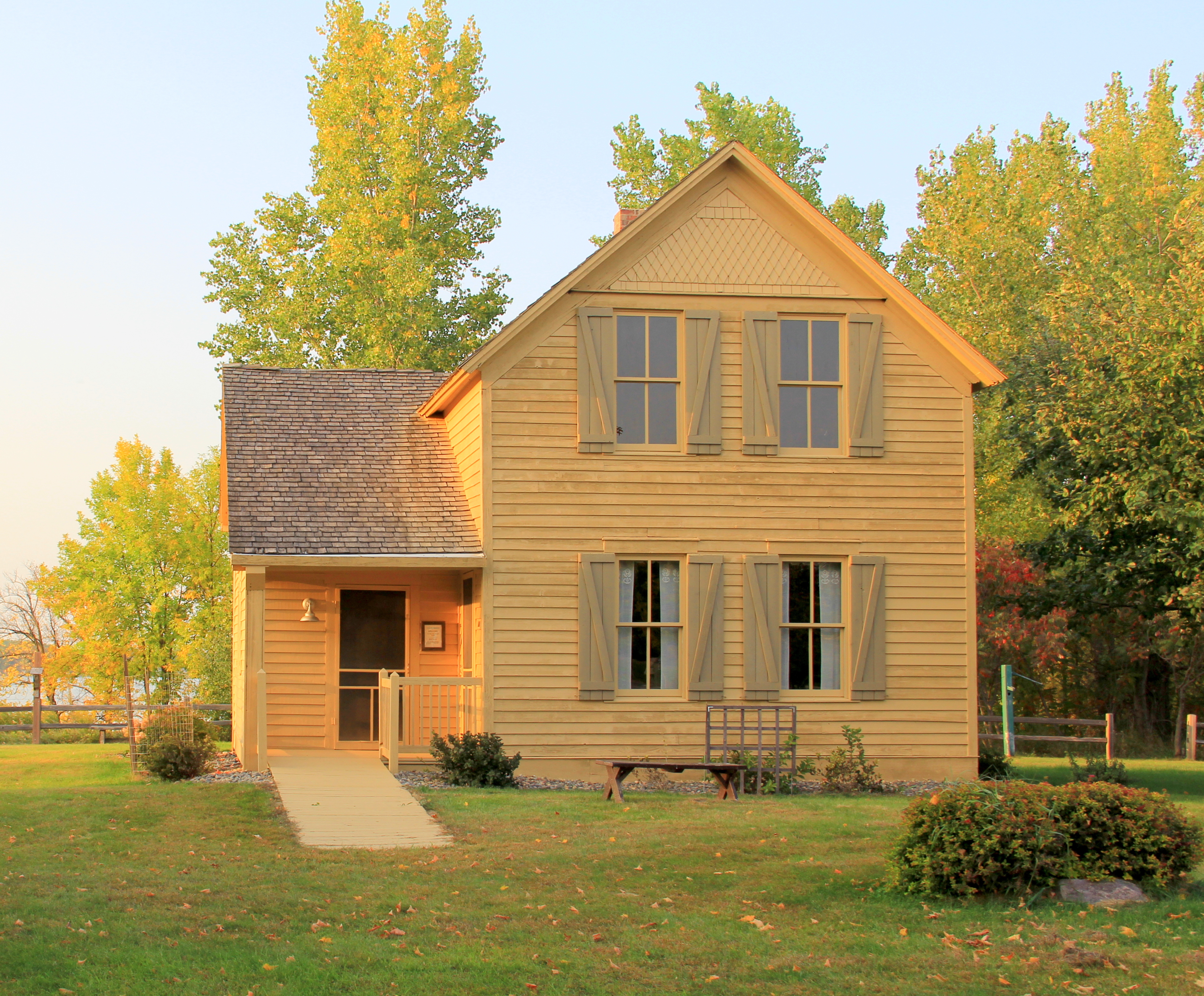
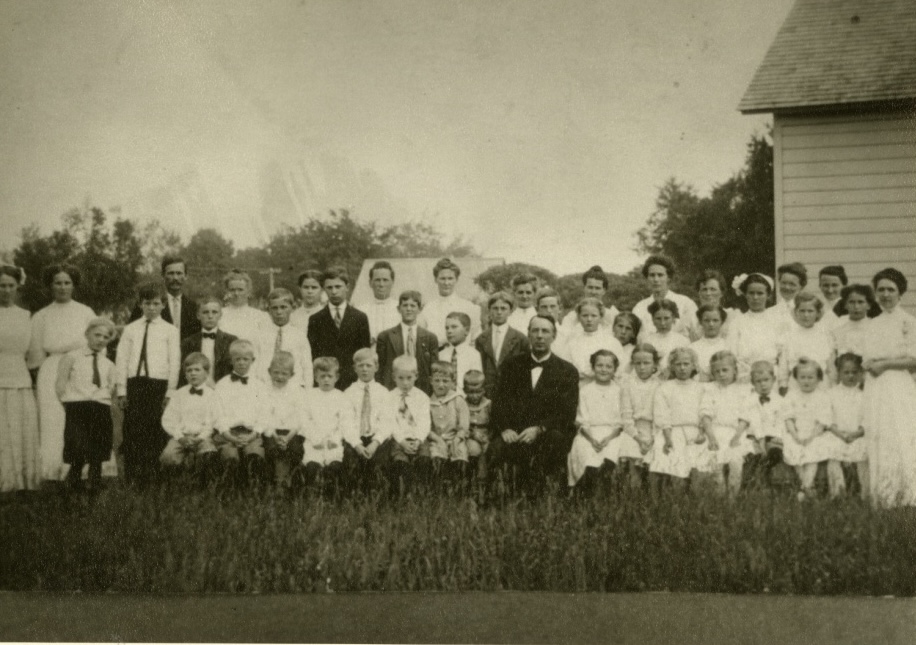
District 14 schoolhouse in Chisago County stood half a mile from Emeroy Johnson’s home. When he started school there in 1905 at age six, he heard English spoken for the first time. Until then, he had known only the amerikasvenska his parents and neighbors spoke.
The public school term lasted eight months from mid-September to mid-May. Then came a single week of vacation. And then he walked right back into the same building for eight more weeks of Swedish school.
This was the svenskskola, a summer parochial school run by the Chisago Lake Lutheran Church. Children between seven to thirteen attended. 1908, enrollment was 254 across eight district schools served by the congregation.
A School as Old as the Congregation. The Chisago Lake congregation established its first one in May 1854. It was the same year the church was established. Eric Norelius taught the first three-month term. Five years later, the congregation hired Johannes Peterson, who became known as “Skol-Johan.” His salary was a mere $4 a month, eight bushels of rye and corn, and free board.
When the Scandia Grove congregation organized in 1858, the members wrote into their founding minutes: “Since we have been born and raised in the faith of the Evangelical Lutheran Church, we also, in this country, for our own good, want to stay by this church confession and give to our children’s children that which we have received.”
Since Sunday schools alone were not adequate, there was a parochial summer term in Swedish. By 1885, two congregations ran 40 to 50 weeks of school; four ran 30 to 38 weeks; 19 ran 12 to 16 weeks; and 22 ran 8 to 11 weeks.
Students started with the ABC-boken, an alphabet primer authorized by the Augustana Synod in 1890 and reprinted until 1919. In 1908, a newer reader called Första läseboken appeared, with colored pictures and a word-based approach.
The students studied Bible history too. The crown of the curriculum was Luther’s Small Catechism, with its 307 questions and answers. Students were expected to memorize all of it before confirmation at age fourteen or fifteen.
A more advanced reader, Församlingsskolans läsebok, ran to 382 pages. It included biographies of Gustaf Vasa, Columbus, Washington, and Lincoln. Articles ranged from bees to whales, from electricity to Niagara Falls. Johnson called it “more than a reader.”